It’s Wednesday! Time to plan that vacation. Go on a trip, will ya?! The network outages, emails, alerts, and help-desk tickets will be there when you get back.
In today’s edition:
 AI’d and prejudice AI’d and prejudice
 SsshGPT SsshGPT
 Manu-HACKturing Manu-HACKturing
—Eoin Higgins, Tom McKay, Billy Hurley, Patrick Lucas Austin
|
|
Devin Curry
It’s safe to say that all tech is not created equal. It’s the biases behind modern technology that NYU data journalism professor Meredith Broussard asks the reader to consider in her new book, More Than a Glitch: Confronting Race, Gender, and Ability Bias in Tech, which delves into how prejudice is built into modern AI and computing technologies, often unintentionally.
Broussard joined IT Brew in March for a Book Club conversation on bias in tech.
This conversation has been edited for length and clarity.
People tend to think of computers and AI as inherently objective. You argue that that’s a problematic position. Can you explain that a little?
The idea that technology is objective or without flaw is itself a kind of bias that I call “techno chauvinism.” Techno chauvinism is the idea that technology is superior to other things.
What I argue instead is [that] we should think about using the right tool for the task. Sometimes the right tool for the task is a computer. Sometimes it’s something simple, like a book in the hands of a child sitting on a parent’s lap. One isn’t inherently better than the other.
When we’re talking about technology and AI, we should talk about the context in which the technology is used. At the beginning of the digital era, it was very easy to say, “There’s going to be so much technology in the future, and it’s all going to be great,” because we didn’t know very much then.
Now we know more, and we know that it depends on the technology, it depends on how it’s built, it depends on the context.
Read more here.—EH
Do you work in IT or have information about your IT department you want to share? Email [email protected].
|
|
With cyber threats and ransomware lurking around every dark corner, businesses need a hero. One with resiliency. One that offers data security, data recovery, and data freedom.
That hero is Veeam Data Platform.
Veeam has a proven track record of rescuing companies from dire data situations. Just watch what happens when a hacker threatens a company dataverse. Spoiler: Action figures bring the ka-pow! to the cyberattack.
Veeam’s valiant efforts haven’t gone unnoticed. They reached #1 in IDC’s Worldwide Semiannual Software Tracker. And they gave all the credit to their community of data-protected pros (ahem, that could be you).
Protection promotes peace of mind. With Veeam, you’ll rest assured that your data is secure and available—always. Get started.
|
|
Mixetto/Getty Images
Call it AI on the DL: The vast majority of cybersecurity workers have used an AI tool of some sort without authorization at work, according to a recent survey commissioned by cloud security platform Devo. Eighty percent of 200 IT security professionals admitted to using such a tool, while a further 23% said they were aware a colleague had done so.
The survey doesn’t identify which tools respondents used, so it could refer to anything from network threat analysis and malware detection software to padding out reports with ChatGPT-style text generators. But 78% said they felt their organization would request that they cease use of the software if they became aware of it—at least until a risk assessment could be carried out.
Devo CEO Marc van Zadelhoff told IT Brew he thinks the poll results show widespread dissatisfaction with the state of automation in security operations centers (SOCs).
“So, 96% of these professionals said they just weren’t satisfied with the tool set available today,” van Zadelhoff said. “Forty-two percent said those tools just weren’t flexible enough. Other ones said the costs were [prohibitive] to use them.”
The Devo survey found that cybersecurity workers are eager for more SOC automation—around half said it would help them with incident and landscape analysis, threat detection and response, and new threat mitigation and prediction. Common complaints about the current degree of SOC automation included limited scalability/flexibility (42%), high costs (39%), and difficulty with integration (37%). Nearly 8 in ten said their organization used AI tools for IT asset inventory management in 2022, while 59% said AI was in use for threat detection.
Keep reading here.—TM
Do you work in IT or have information about your IT department you want to share? Email [email protected]. Want to go encrypted? Ask Tom for his Signal.
|
|
Rivian
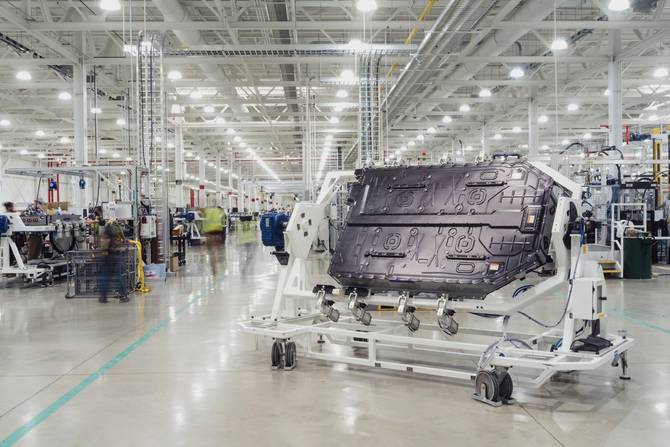
Cyberattacks last year hit the makers of tires, steel, and wind turbines—and effectively anyone who needed them. Like your most enthusiastic friend on LinkedIn, manufacturing is connected.
After detecting a ransomware attack in February of last year, Bridgestone shut down manufacturing facilities across North America and disconnected dealers from some production tools.
A report from the industrial cybersecurity company Dragos found that over 70% of all 2022 ransomware attacks focused on manufacturing environments and impacted at least 437 manufacturing entities.
During a Tech Brew presentation titled “Today’s Biggest Questions in Cybersecurity,” a PepsiCo infosec specialist named Juan Carlos asked, “In 2023 and beyond, what do you see as the biggest, most prevalent cyberthreats for the manufacturing industry?”
IT Brew posed the same question to four additional IT professionals.
The responses have been edited for length and clarity.
Jason Stading, consulting manager, ISG: One of the issues in manufacturing environments is old legacy equipment. Make sure that you have the right plan to update and refresh those systems…You want to make sure you’ve got the right compensating controls. And that I think starts with good physical security, good identity and access management, and then, where possible, for anything going outbound…you want to make sure you’ve got the right data protection, security, encryption, data loss prevention, and data leak prevention.
Keep reading here.—BH
Do you work in IT or have information about your IT department you want to share? Email [email protected].
|
|
TOGETHER WITH PALO ALTO NETWORKS
|
|
Shut ’em down. Modern security threats are as intelligent as they are destructive, and SOCs with legacy tech aren’t up to the challenge. Detect and defend against modern attacks with Palo Alto Networks’ AI-driven Cortex ecosystem. Check out this infographic to see how the Cortex platform helps SOC teams improve security outcomes.
|
|
|
Ever wonder why you never heard back from the jobs you applied for? Maybe your resume wasn’t strong enough. Until now, that is. Morning Brew created the ultimate guide to perfecting your resume—and in typical Brew fashion, it’s completely free. Check it out here and craft the stellar resume you deserve.
|
|
Francis Scialabba
Today’s top IT reads.
Stat: 47. That’s the number of defensive cyber operations, aka “hunt-forward” missions, that the US has conducted with other countries over the past three years. (Reuters)
Quote: “One of the most prevalent threat actors in the United States today that is…really hard to defend against: It’s the teenagers.”—Charles Carmakal, CTO of Google Cloud’s Mandiant Consulting, at San Francisco’s RSA Conference this week (The Register)
Read: How to make a “smart” city secure. (CISA)
Don’t hold back: Complete this short survey to help us continue making the content you love. You might even win a $250 gift card for completing it. Don’t be shy—share those thoughts.*
*This is sponsored advertising content.
|
|
-
Microsoft wants you to find bugs in Bing.
-
Google has made one-time tokens an easier time by cloud-syncing its Authenticator app.
-
As attacks on industrial-control systems increase, a collaborative information-sharing effort called “Ethos” has arrived.
-
Nvidia’s open-source toolkit aims to add “Guardrails” to text-generating AI models.
|
|
Check out the IT Brew stories you may have missed.
|
|
|